Buying a used car is easier to manage when you turn the decision into a short evidence file. A promising advert, a vehicle history search, and a seller's explanation answer different questions. Before committing money, connect each answer to the same vehicle and record what still needs checking.
This checklist is for a buyer in Georgia comparing a specific car. It brings together identity, local paperwork, available history, mechanical condition, and the full cost of taking ownership. Use ZINFO for the supported research steps, then confirm the decisive records with the relevant authority and the car's condition with an independent mechanic.
1. Make one record for each candidate
Start a note with the advert link, asking price and currency, seller's contact, registration details, VIN, displayed mileage, and the date you viewed the car. Keep documents shared by the seller privately. Record missing information as a question instead of filling it in from a similar model or another listing.
For every check, use three simple labels: confirmed, unresolved, or inconsistent. Add the source and date beside each label. This prevents an old screenshot or a confident verbal answer from looking like a fresh verification. If you compare several cars, keep separate notes so a repair estimate or history result cannot be assigned to the wrong vehicle.
2. Match the car to its documents
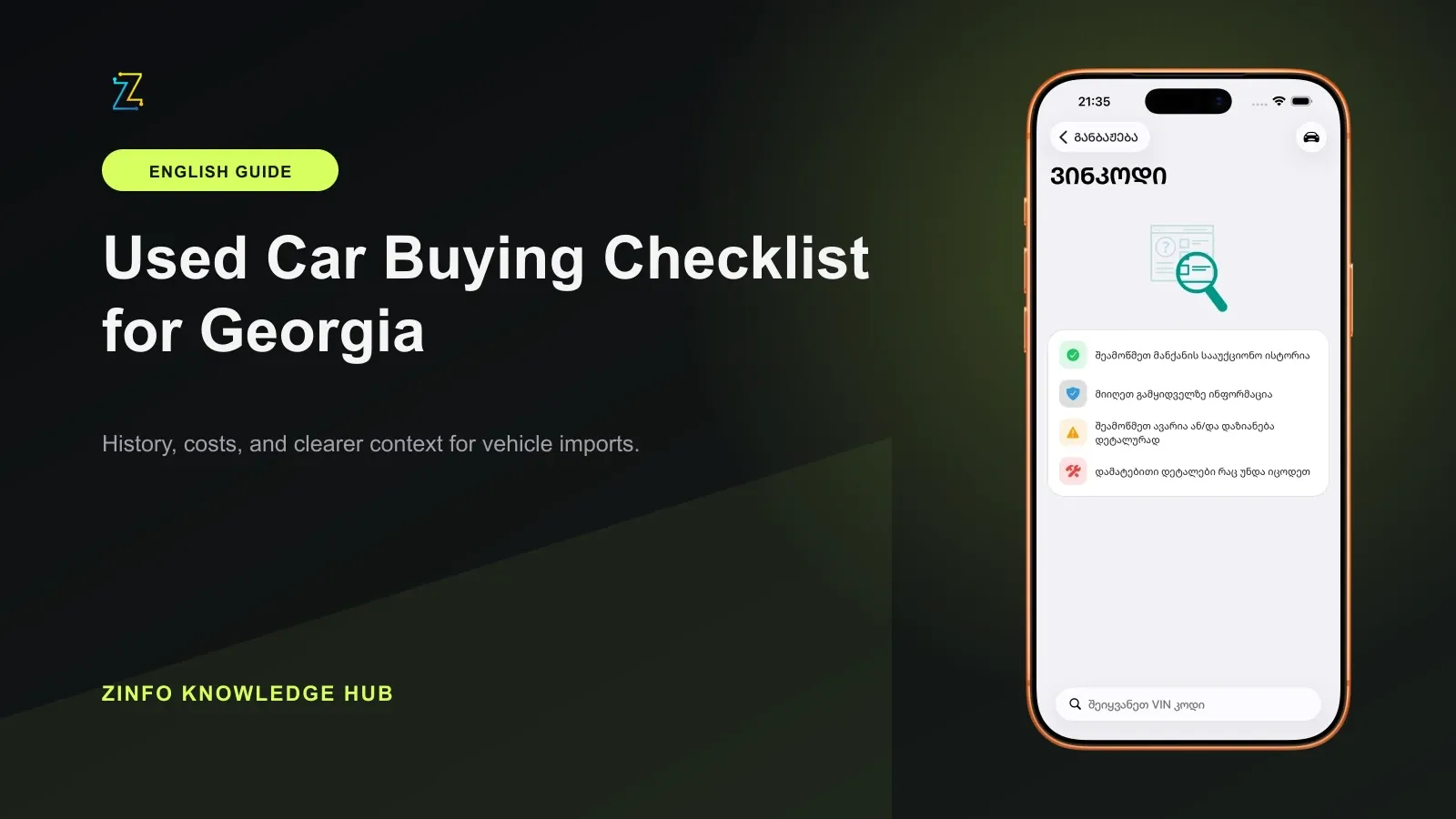
Compare the VIN shown on the vehicle with its registration document, advert, and any history report. ZINFO's VIN search accepts a 17-character code. For a vehicle with a different identifier format, seek model-specific confirmation rather than editing the code until a search accepts it.
The NHTSA VIN decoder explains that decoded information is supplied by manufacturers. It can help check encoded vehicle details; it does not establish the identity of the person offering the car or its current mechanical condition. Its guidance concerns the U.S. vehicle system, which is particularly relevant when checking an American import.
Ask the seller to explain any mismatch before proceeding. Do not assume a single wrong character is harmless. Our VIN checking guide covers that research step in more detail, including the limits of available history.
3. Verify local records and the transfer route
For a vehicle registered in Georgia, distinguish a history search from an official legal-status check. The Service Agency's legal-status certificate describes registration information and records concerning seizure, pledge, tax lien, wanted status, temporary registration, or zero customs clearance. Read the actual certificate for the exact vehicle; an app result or a seller's statement is not a substitute.
The Agency's ownership transfer page lists proof of ownership, an identity document, a vehicle examination act, a joint application, and proof of the required fee payment. Use that page to prepare questions about your transaction, then confirm the current route and any requirements for a representative or a special case directly with the Agency. This guide does not reproduce a fee quote or promise that every transaction follows the same process.
Before agreeing to a deposit, clarify who is selling the car, who can complete the transfer, which documents will be supplied, and what happens if an unresolved record prevents the planned transaction. Keep the agreed conditions in writing. A missing or unexplained document should remain an unresolved item.
4. Compare history with an independent inspection
ZINFO's vehicle research tools can show available specifications, mileage, damage information, photographs, and auction or sales records. The content depends on the records available for that VIN. Compare dates, mileage units, photos, and the seller's explanation; do not treat an empty result as proof that a car has never been damaged.
For U.S. history, NMVTIS guidance recommends an independent inspection alongside a history report and other available information. It also distinguishes its records from repair and maintenance information that may be supplied elsewhere. Do not assume a ZINFO result is an NMVTIS report or that either source covers every event.
Book an independent mechanic before the purchase decision. Ask for a written report tied to the car's VIN and an estimate for required repairs. The FTC's used-car guidance explains that vehicle history cannot replace a mechanical inspection, even when a dealer has inspected or certified the car. We use that practical inspection advice here; U.S. dealer and warranty rules on the same page are not presented as Georgian law.
5. Separate inspection status from repair needs
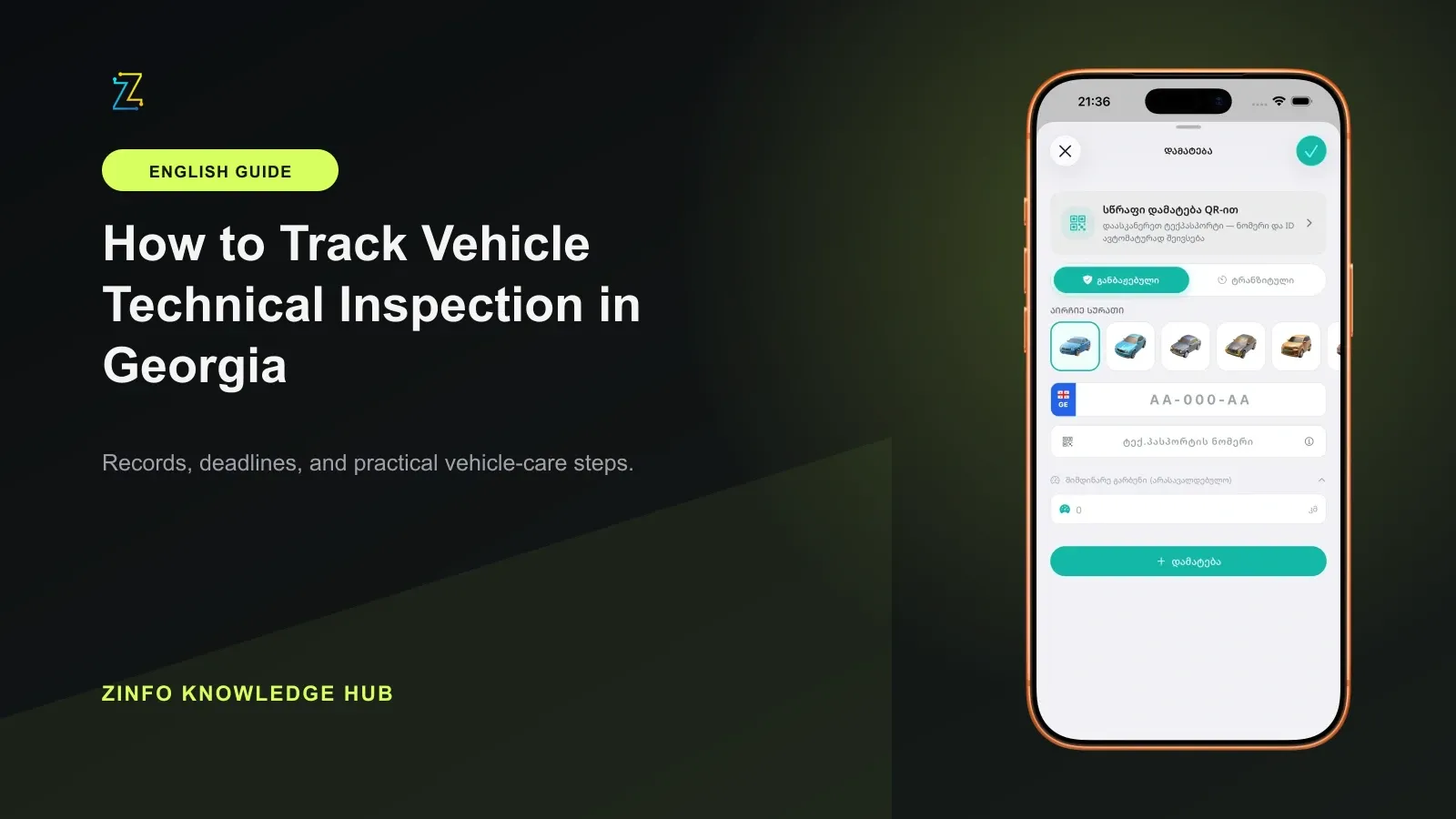
A periodic technical-inspection record and a purchase inspection serve different purposes. Review the supported vehicle's available inspection status and date in ZINFO, compare it with the actual record, and confirm unclear information through the relevant inspection service. A visible date alone does not tell you the cost of bringing a used car into the condition you expect.
Use the technical-inspection guide for the separate date and status workflow. Ask the independent mechanic which findings need attention before use and which expenses belong in your near-term budget. Keep the inspection report, repair estimate, and periodic-inspection record as separate evidence.
6. Price the complete purchase
Write down the asking price, currency, agreed inclusions, immediate repair estimate, and expected registration, insurance, and initial service costs. Mark an unknown cost as pending. For an imported vehicle, track customs and transport costs separately and verify them with the responsible source before relying on a total.
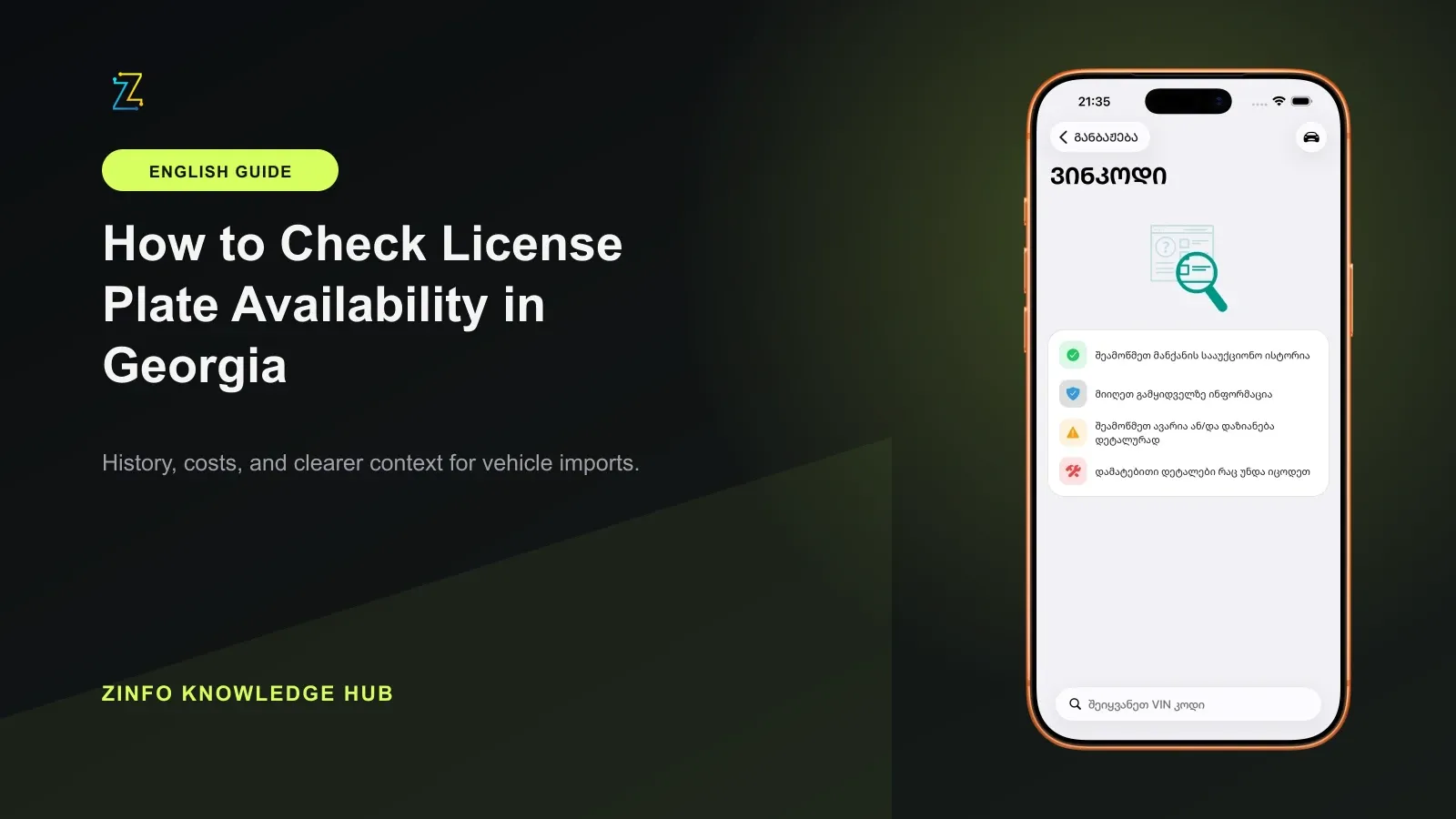
If you want a particular registration plate, use ZINFO's availability search as a planning step. The Service Agency operates the official reservation process. A search result does not complete that process. Our plate availability guide explains the distinction, so a preferred combination does not become an assumed part of the deal.
7. Make the final decision from the open items
Before payment, review the same short list again:
- Identity: the vehicle and all relevant documents refer to the same VIN.
- Official records: the current result is understood and outstanding questions have an authoritative answer.
- Transfer: the seller, required documents, and intended process are confirmed.
- Condition: an independent report and repair estimate are available.
- Cost: included items and remaining expenses are clear in writing.
If information conflicts, pause and identify who can resolve it. If a seller refuses an independent inspection or cannot explain the documents, consider another candidate. Keep a copy of the final evidence file and agreed terms; this checklist supports a decision but cannot certify ownership, guarantee data completeness, or predict future faults.
Use ZINFO to gather the supported checks for the car you are considering. Return to the official record and independent inspection whenever the decision depends on something the app cannot establish.
Sources
- Vehicle research and imports · ZINFO · 2026-09-14
- Cars, fines, and maintenance · ZINFO · 2026-09-14
- სატრანსპორტო საშუალების სამართლებრივი მდგომარეობის შესახებ ცნობა · საქართველოს შსს მომსახურების სააგენტო · 2026-09-14
- სატრანსპორტო საშუალებების გადაფორმება · საქართველოს შსს მომსახურების სააგენტო · 2026-09-14
- შენახვა-დაჯავშნა · საქართველოს შსს მომსახურების სააგენტო · 2026-09-14
- VIN Decoder · National Highway Traffic Safety Administration · 2026-09-14
- Understanding an NMVTIS Vehicle History Report · U.S. Department of Justice, Bureau of Justice Assistance · 2026-09-14
- Buying a Used Car From a Dealer · Federal Trade Commission · 2026-09-14